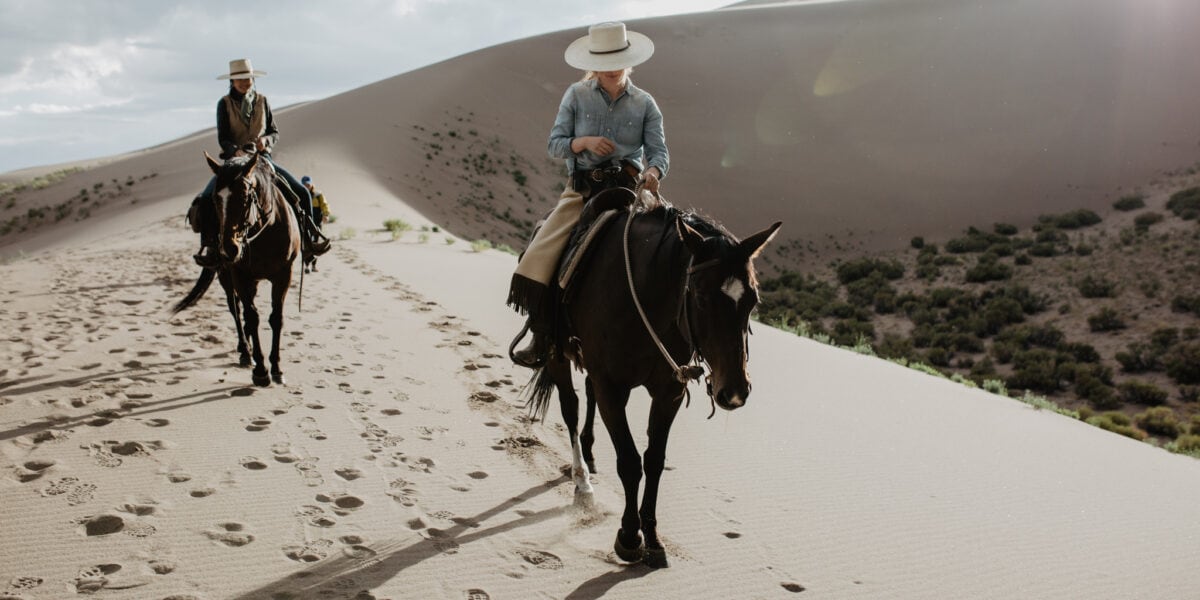
Stay at Ranchlands’ Zapata location and ride through Colorado’s Great Sand Dunes National Park. (Ranchlands/Avery Sass).
There’s a big difference between a dude ranch and a working cattle ranch, and this new generation of ranches is bringing a modern touch to a storied Western tradition.
Ranchlands
This Colorado agricultural business operates large-scale cattle and bison ranches in addition to hospitality stays focused on preserving the legacy of ranching in the American West. They also have a mercantile with expertly crafted leatherworks. Guests who stay on-site can learn time-honored crafts like natural dyeing, all of which are geared toward preserving native grasslands while creating meaningful experiences.
Lone Mountain Ranch
This petite resort housed inside a restored 1915 homestead in Big Sky, Montana, hosts rodeos and Western concerts for both guests and locals in the northern Rockies. The property opened for its first season this year, offering 53 miles of trails, access to Yellowstone National Park, excellent fly fishing, and the full-service farm-to-table Horn & Cantle restaurant and saloon.
Alisal Ranch
Situated on 10,500 acres in California’s Santa Ynez Valley, this historic ranch hosts regular wellness retreats, including one offering an equine therapy program, where guests explore the human-horse connection. Guests experience multiple sessions that build on each other, walking away with new inter- and intrapersonal skills.
Apple CEO Tim Cook said Thursday that the majority of iPhones sold in the U.S. in the current fiscal quarter will be sourced from India, while iPads and other devices will come from Vietnam as the company works to avoid the impact of President Trump’s tariffs on its business. Apple’s earnings for the first three months of the year topped Wall Street’s expectations thanks to high demand for its iPhones, and the company said tariffs had a limited effect on the fiscal second quarter’s results. Cook added that for the current quarter, assuming things don’t change, Apple expects to see $900 million added to its costs as a result of the tariffs.
Visa is hoping to hand your credit card to an artificial intelligence “agent” that can find and buy clothes, groceries, airplane tickets and other items on your behalf.
Skift Editor-In-Chief Sarah Kopit discusses how summer travel plans remain uncertain for most as many international travelers are leery to travel abroad. Watch!