NEW YORK (AP) — Six weeks before UnitedHealthcare CEO Brian Thompson was gunned down outside a Manhattan hotel in December, suspect Luigi Mangione mused about rebelling against “the deadly, greed fueled health insurance cartel” and said killing the executive “conveys a greedy bastard that had it coming,” prosecutors revealed Wednesday.
The Manhattan district attorney’s office quoted extensively from Mangione’s handwritten diary — highlighting his desire to kill an insurance honcho and praise for Ted Kaczynski, the Unabomber — as they fight to uphold his state murder charges. They also cited a confession they say he penned “To the feds,” in which he wrote that “it had to be done.”
Mangione’s lawyers want the state case thrown out, arguing in court papers that those charges and a parallel federal death penalty case amount to double jeopardy.
They also want state terrorism charges dismissed, have asked for the federal case to go first and say prosecutors should be barred from using evidence collected during Mangione’s arrest, including a 9mm handgun, statements to police and the diary.
Manhattan prosecutors contend that there are no double jeopardy issues because neither case has gone to trial and because the state and federal prosecutions involve different legal theories.
His lawyers say that has created a “legal quagmire” that makes it “legally and logistically impossible to defend against them simultaneously.”
The state charges, which carry a maximum of life in prison, allege that Mangione wanted to “intimidate or coerce a civilian population,” that is, insurance employees and investors. The federal charges allege that Mangione stalked an individual, Thompson, and do not involve terror allegations.
Mangione, 27, has pleaded not guilty in both cases. No trial dates have been set.
Mangione’s “intentions were obvious from his acts, but his writings serve to make those intentions explicit,” prosecutors said in Wednesday’s filing. The writings, which they sometimes described as a manifesto, “convey one clear message: that the murder of Brian Thompson was intended to bring about revolutionary change to the healthcare industry.”
They quoted excerpts in which Mangione discussed options for the attack, such as bombing UnitedHealthcare’s headquarters, before deciding to target the company’s investor conference in Manhattan. He wrote about plans to “wack the CEO at the annual parasitic bean-counter convention” because it was “targeted, precise and doesn’t risk innocents.”
UnitedHealthcare, the largest U.S. health insurer, “literally extracts human life force for money,” Mangione wrote, envisioning the news headline, “Insurance CEO killed at annual investors conference.”
The company has said he was never a client.
Mangione is due back in state court June 26, when Judge Gregory Carro is expected to rule on his request for dismissal.
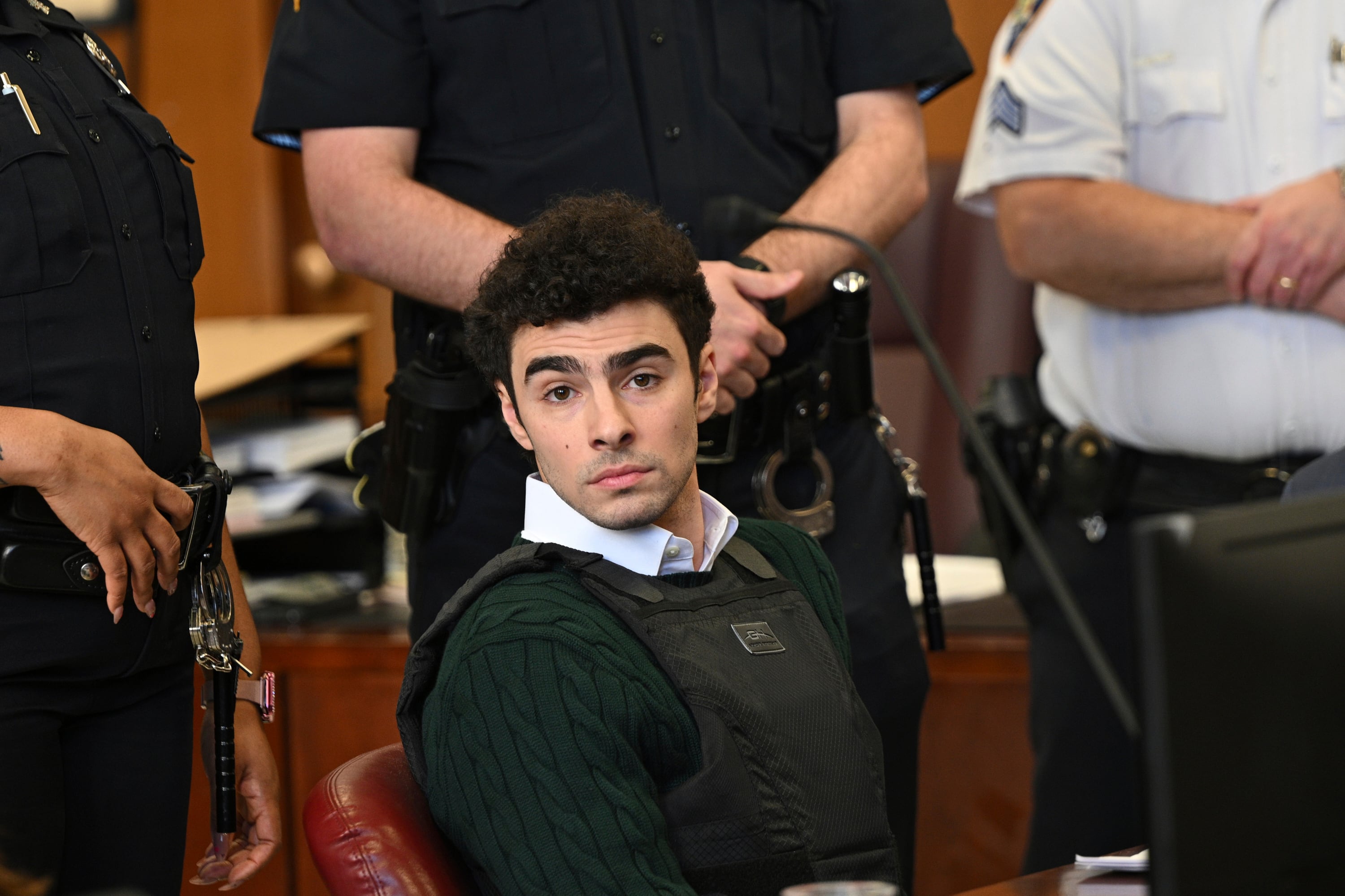
His lawyers asked Tuesday for his handcuffs and bulletproof vest to be removed during the hearing. They called him a “a model prisoner, a model defendant” and said the security measures would suggest to potential jurors that he is dangerous. Carro has not ruled on that.
Mangione’s next federal court date is Dec. 5, a day after the one-year anniversary of Thompson’s death.
Surveillance video showed a masked gunman shooting Thompson from behind as he arrived for the conference Dec. 4 at the New York Hilton Midtown. Police say “delay,” “deny” and “depose” were scrawled on the ammunition, mimicking a phrase commonly used to describe how insurers avoid paying claims.
Mangione was arrested Dec. 9 at a McDonald’s in Altoona, Pennsylvania, 230 miles (about 370 kilometers) to the west, and he is being held in a federal jail in Brooklyn.
Manhattan District Attorney Alvin Bragg has called the ambush “a killing that was intended to evoke terror.”
U.S. Attorney General Pam Bondi announced in April that she was directing federal prosecutors to seek the death penalty for “an act of political violence” and a “premeditated, cold-blooded assassination that shocked America.”
The killing and ensuing search for Mangione rattled the business community while galvanizing health insurance critics who rallied around him as a stand-in for frustrations over coverage denials and hefty bills. Supporters have flocked to his court appearances and flooded him with mail.
Mangione “demonstrated in his manifesto that he was a revolutionary anarchist who would usher in a better healthcare system by killing the CEO” of one of the biggest U.S. companies, prosecutors wrote. “This brutal, cowardly murder was the mechanism that defendant chose to bring on that revolution.”