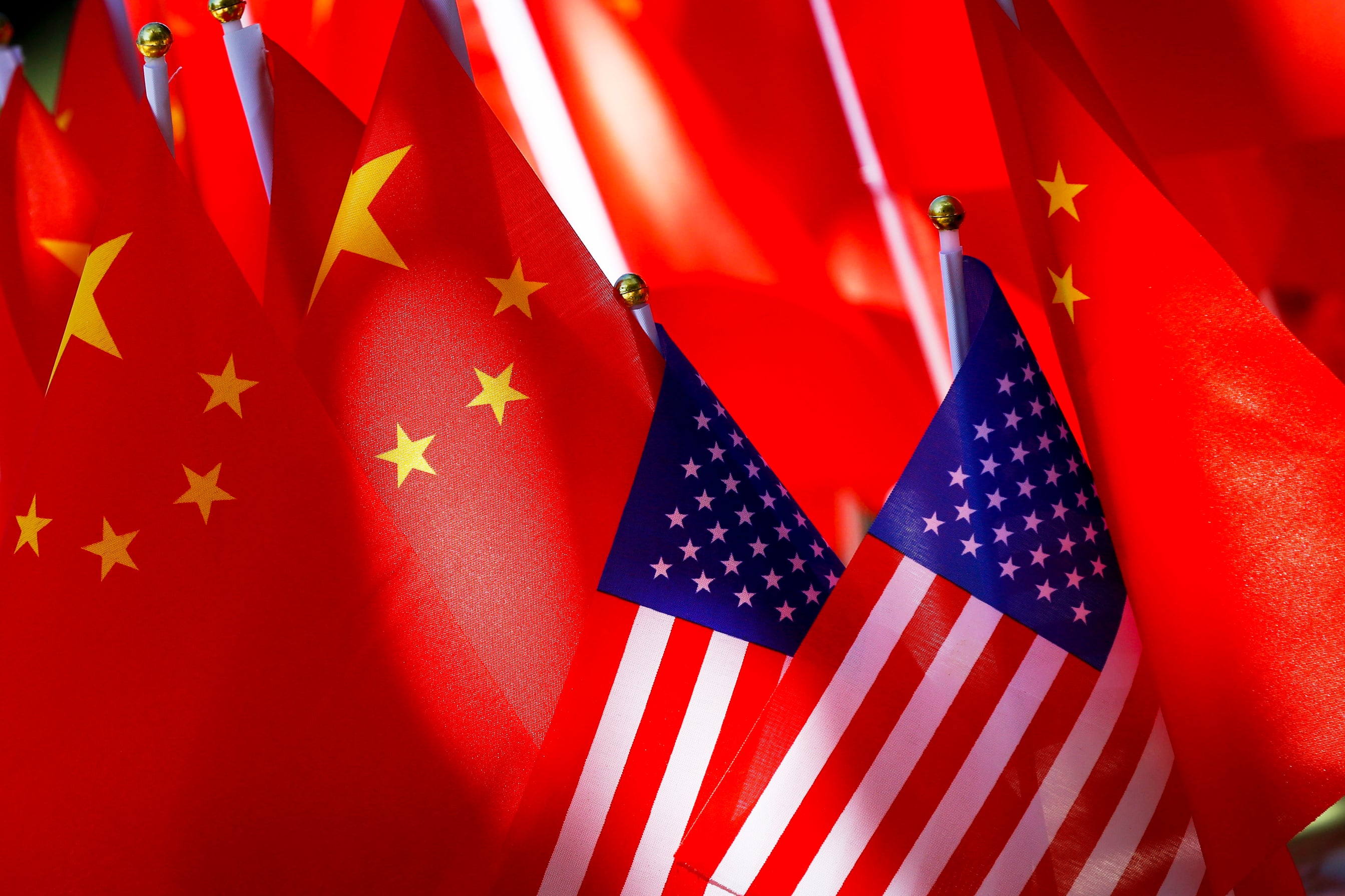
TAIPEI, Taiwan (AP) — China criticized the U.S. on Monday over moves it alleged harmed Chinese interests, including issuing AI chip export control guidelines, stopping the sale of chip design software to China, and planning to revoke Chinese student visas.
“These practices seriously violate the consensus,” the Commerce Ministry said in a statement, referring to a China-U.S. joint statement in which the United States and China agreed to slash their massive recent tariffs, restarting stalled trade between the world’s two biggest economies.
But last month’s de-escalation in President Donald Trump’s trade wars did nothing to resolve underlying differences between Beijing and Washington and Monday’s statement showed how easily such agreements can lead to further turbulence.
The deal lasts 90 days, creating time for U.S. and Chinese negotiators to reach a more substantive agreement. But the pause also leaves tariffs higher than before Trump started ramping them up last month. And businesses and investors must contend with uncertainty about whether the truce will last.
U.S. Trade Representative Jamieson Greer said the U.S. agreed to drop the 145% tax Trump imposed last month to 30%. China agreed to lower its tariff rate on U.S. goods to 10% from 125%.
The Commerce Ministry said China held up its end of the deal, canceling or suspending tariffs and non-tariff measures taken against the U.S. “reciprocal tariffs” following the agreement.
“The United States has unilaterally provoked new economic and trade frictions, exacerbating the uncertainty and instability of bilateral economic and trade relations,” while China has stood by its commitments, the statement said.
It also threatened unspecified retaliation, saying China will “continue to take resolute and forceful measures to safeguard its legitimate rights and interests.”
Trump stirred further controversy Friday, saying he will no longer be nice with China on trade, declaring in a social media post that the country had broken an agreement with the United States.
Hours later, Trump said in the Oval Office that he will speak with Chinese President Xi Jinping and “hopefully we’ll work that out,” while still insisting China had violated the agreement.
“The bad news is that China, perhaps not surprisingly to some, HAS TOTALLY VIOLATED ITS AGREEMENT WITH US,” Trump posted. “So much for being Mr. NICE GUY!”
In response to recent comments by Trump, the Commerce Ministry said of the U.S.: “Instead of reflecting on itself, it has turned the tables and unreasonably accused China of violating the consensus, which is seriously contrary to the facts.”
U.S. Commerce Secretary Howard Lutnick said that the Chinese were “just slow rolling the deal” from Geneva.
Appearing on Fox News on Sunday, Lutnick said the U.S. was “taking certain actions to show them what it feels like on the other side of that equation,” adding that Trump would “work it out” with Xi.
The Trump administration also stepped up the clash with China in other ways last week, announcing that it would start revoking visas for Chinese students studying in the U.S.
U.S. campuses host more than 275,000 students from China.
Both countries are in a race to develop advanced technologies such as artificial intelligence, with Washington seeking to curb China’s access to the most advanced computer chips. China is also seeking to displace the U.S. as the leading power in the Asia-Pacific, including through gaining control over close U.S. partner and leading tech giant Taiwan.
Many U.S. consumers say they’ve noticed higher than usual prices for holiday gifts in recent months, according to a a December poll from The Associated Press-NORC Center for Public Affairs Research. A contributing factor is the unusually high import taxes the Trump administration put on foreign goods. While the worst-case consumer impact that many economists foresaw from the administration’s trade policies hasn’t materialized, some popular gift items have been affected more than others. Most toys and electronics sold in the U.S. come from China. So do most holiday decorations. Jewelry prices have risen due to the cost of gold.
Serbia’s prosecutor for organized crime has charged a government minister and three others with abuse of position and falsifying of documents related to a luxury real estate project linked to U.S. President Donald Trump’s son-in-law Jared Kushner. The charges came on Monday. The investigation centers on a controversy over a a bombed-out military complex in central Belgrade that was a protected cultural heritage zone but that is facing redevelopment as a luxury compound by a company linked to Kushner. The $500 million proposal to build a high-rise hotel, offices and shops at the site has met fierce opposition from experts at home and abroad. Selakovic and others allegedly illegally lifted the protection status for the site by falsifying documentation.
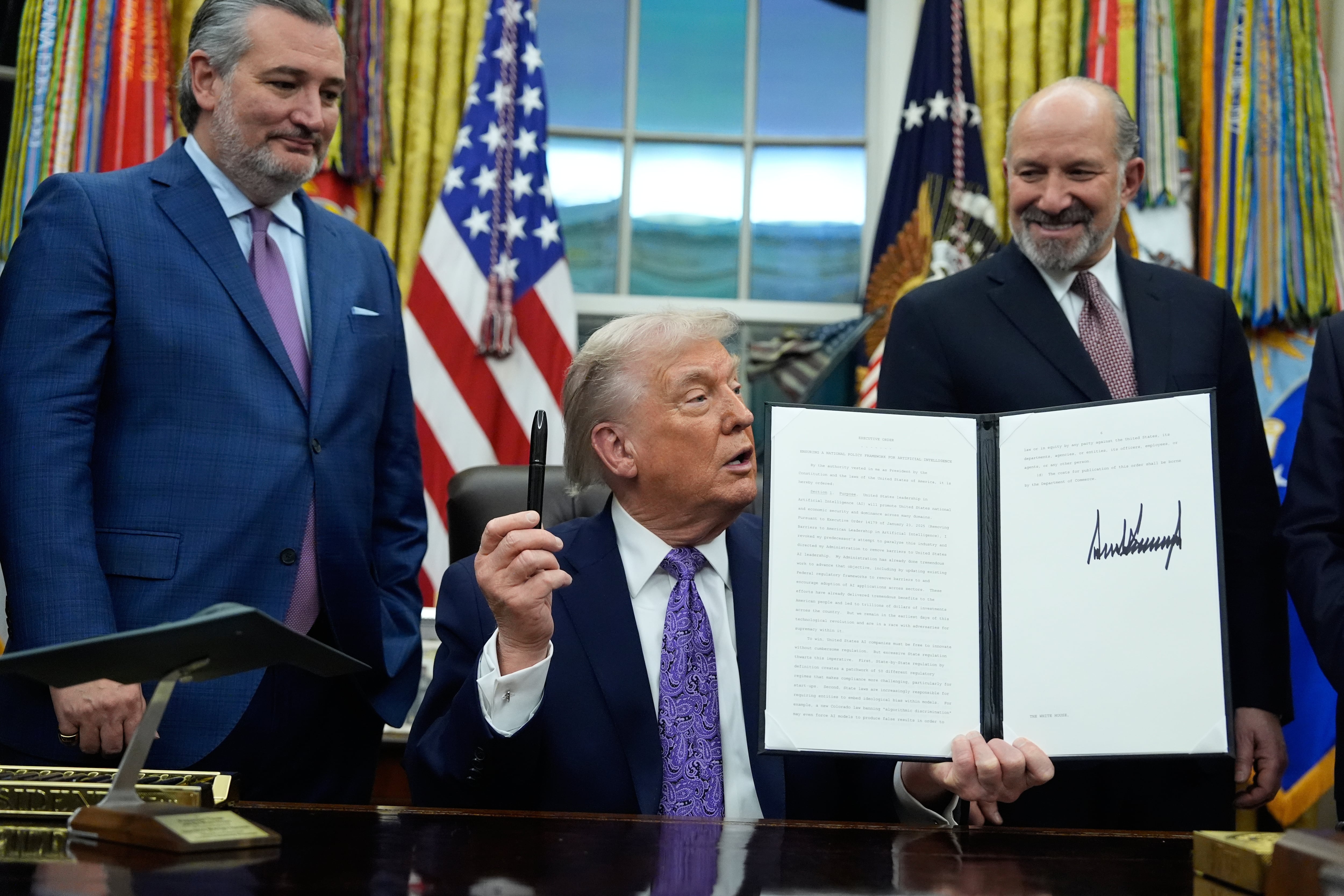
President Donald Trump has signed an executive order to block states from regulating artificial intelligence. He argues that heavy regulations could stifle the industry, especially given competition from China. Trump says the U.S. needs a unified approach to AI regulation to avoid complications from state-by-state rules. The order directs the administration to draw up a list of problematic regulations for the Attorney General to challenge. States with laws could lose access to broadband funding, according to the text of the order. Some states have already passed AI laws focusing on transparency and limiting data collection.
The New York Times and President Donald Trump are fighting again. The news outlet said Wednesday it won't be deterred by Trump's “false and inflammatory language” from writing about the 79-year-old president's health. The Times has done a handful of stories on that topic recently, including an opinion column that said Trump is “starting to give President Joe Biden vibes.” In a Truth Social post, Trump said it might be treasonous for outlets like the Times to do “FAKE” reports about his health and "we should do something about it.” The Republican president already has a pending lawsuit against the newspaper for its past reports on his finances.
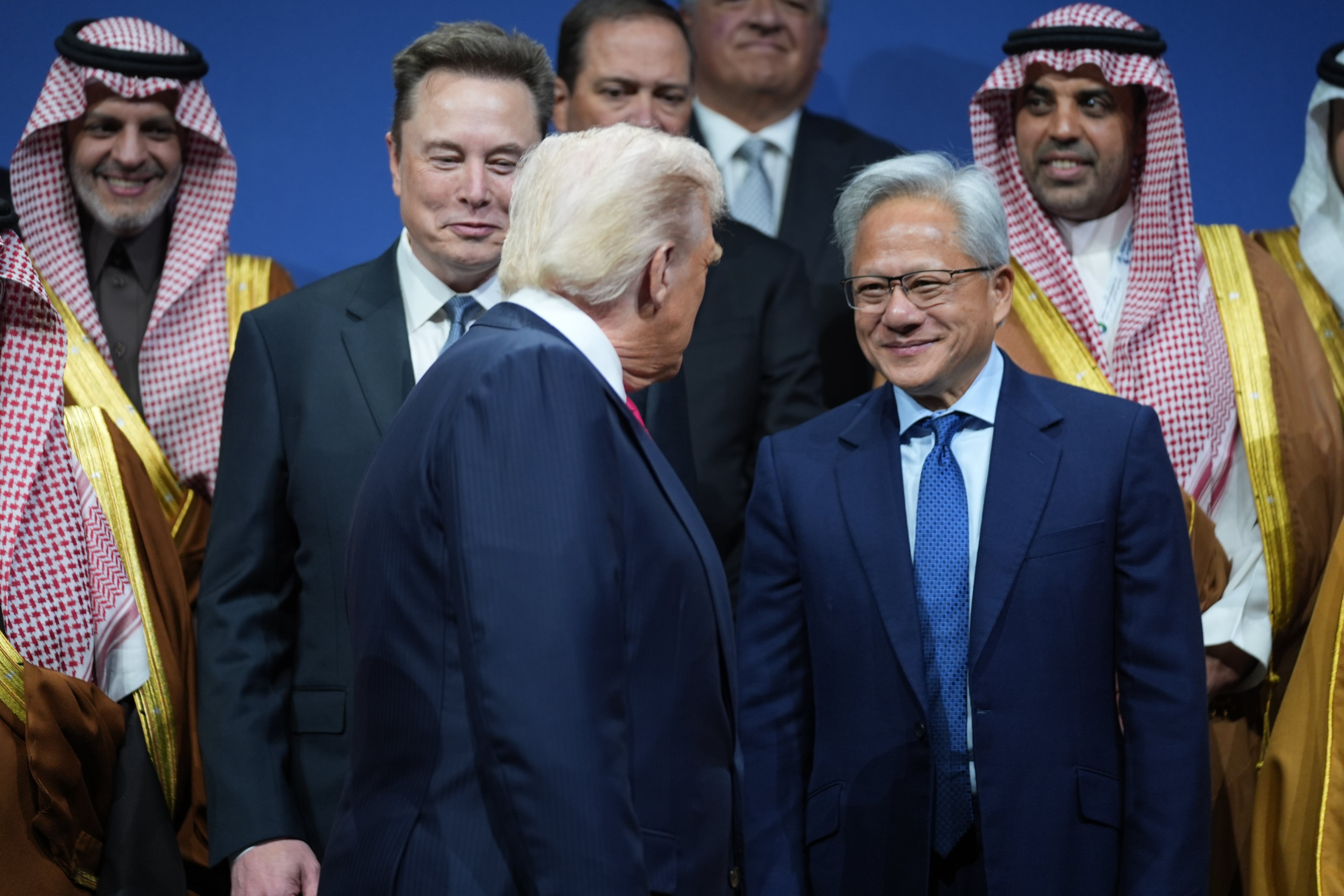
President Donald Trump says he will allow Nvidia to sell its H200 computer chip used in the development of artificial intelligence to “approved customers” in China. Trump said Monday on his social media site that he had informed China’s leader Xi Jinping and “President Xi responded positively!” There had been concerns about allowing advanced computer chips into China as it could help them to compete against the U.S. in building out AI capabilities. But there has also been a desire to develop the AI ecosystem with American companies such as chipmaker Nvidia.
House Republicans in key battleground districts are working to contain the political fallout expected when thousands of their constituents face higher bills for health insurance coverage obtained through the Affordable Care Act. For a critical sliver of the GOP majority, the impending expiration of the enhanced premium tax credits after Dec. 31 could be a major political liability as they potentially face midterm headwinds in a 2026 election critical to President Donald Trump’s agenda. For Democrats, the party’s strategy for capturing the House majority revolves around pinning higher bills for groceries, health insurance and utilities on Republicans.