WASHINGTON (AP) — Chief Justice John Roberts on Monday let President Donald Trump remove a member of the Federal Trade Commission, the latest in a string of high-profile firings allowed for now by Supreme Court.
Trump first moved to fire Rebecca Slaughter in the spring, but she sued and lower courts ordered her reinstated because the law allows commissioners to be removed only for problems like misconduct or neglect of duty.
Roberts halted those decisions in a brief order, responding to an appeal from the Trump administration on the court’s emergency docket.
The Justice Department has argued that the FTC and other executive branch agencies are under Trump’s control and the Republican president is free to remove commissioners without cause.
Slaughter’s lawsuit over her firing will keep playing out, as Roberts asked her lawyers to respond to the Trump administration’s arguments by next week.
The court has previously allowed the firings of several other board members of independent agencies. It has suggested, however, that his power to fire has limitations at the Federal Reserve, a prospect that could soon be tested with the case of Fed Gov. Lisa Cook.
Monday’s order is the latest sign that the Supreme Court’s conservative majority has effectively abandoned a 90-year-old high court precedent that protected some federal agencies from arbitrary presidential action.
In the 1935 decision known as Humphrey’s Executor, the court unanimously held that presidents cannot fire independent board members without cause.
The decision ushered in an era of powerful independent federal agencies charged with regulating labor relations, employment discrimination, the airwaves and much else. But it has long rankled conservative legal theorists who argue the modern administrative state gets the Constitution all wrong because such agencies should answer to the president.
The agency at the center of the case was also the FTC, a point cited by lower-court judges in the lawsuit filed by Slaughter. She has ping-ponged in and out of the job as the case worked its way through the courts.
The FTC is a regulator created by Congress that enforces consumer protection measures and antitrust legislation. Its seats are typically comprised of three members of the president’s party and two from the opposing party.
___
Associated Press writer Mark Sherman contributed to this report.
Many U.S. consumers say they’ve noticed higher than usual prices for holiday gifts in recent months, according to a a December poll from The Associated Press-NORC Center for Public Affairs Research. A contributing factor is the unusually high import taxes the Trump administration put on foreign goods. While the worst-case consumer impact that many economists foresaw from the administration’s trade policies hasn’t materialized, some popular gift items have been affected more than others. Most toys and electronics sold in the U.S. come from China. So do most holiday decorations. Jewelry prices have risen due to the cost of gold.
Serbia’s prosecutor for organized crime has charged a government minister and three others with abuse of position and falsifying of documents related to a luxury real estate project linked to U.S. President Donald Trump’s son-in-law Jared Kushner. The charges came on Monday. The investigation centers on a controversy over a a bombed-out military complex in central Belgrade that was a protected cultural heritage zone but that is facing redevelopment as a luxury compound by a company linked to Kushner. The $500 million proposal to build a high-rise hotel, offices and shops at the site has met fierce opposition from experts at home and abroad. Selakovic and others allegedly illegally lifted the protection status for the site by falsifying documentation.
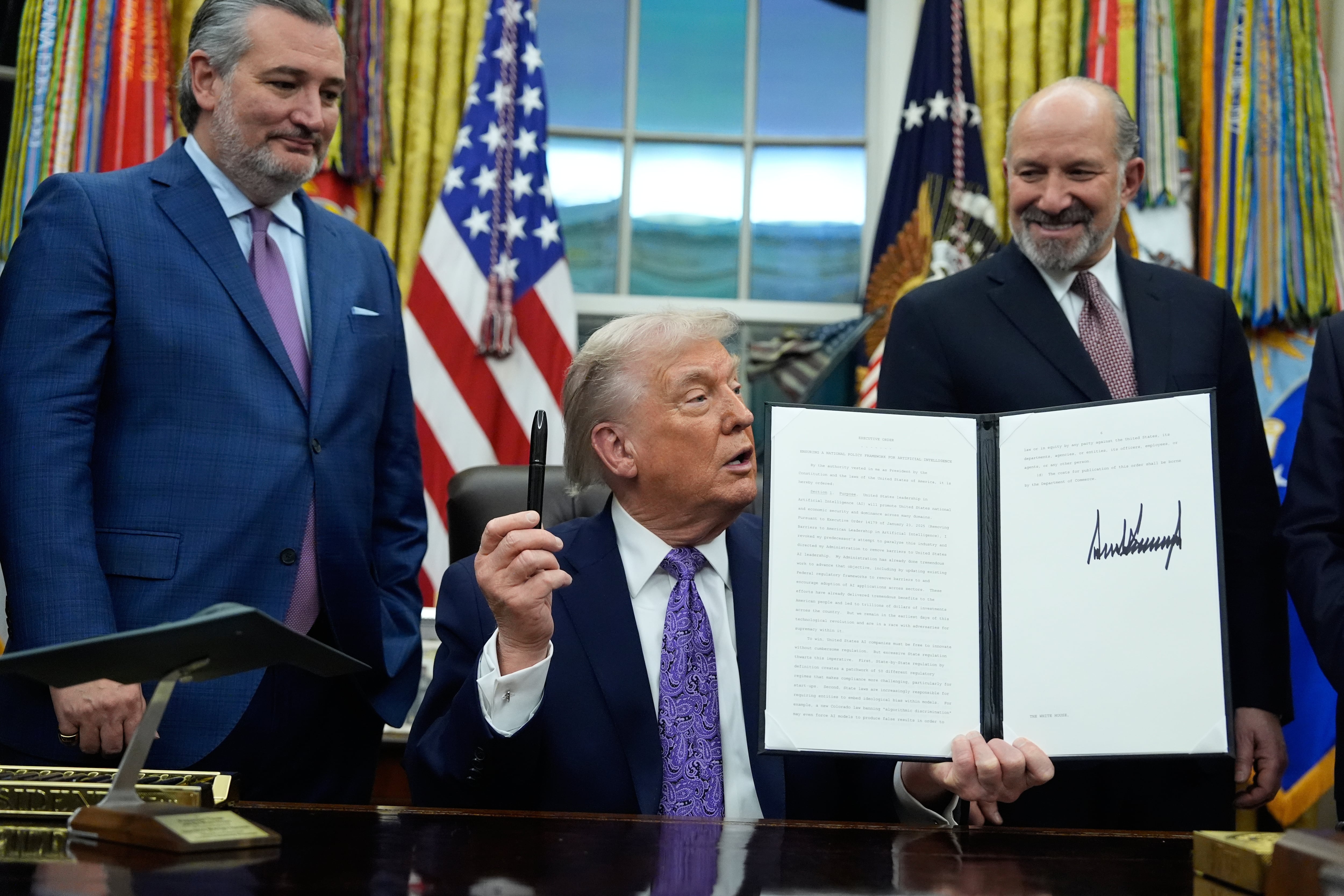
President Donald Trump has signed an executive order to block states from regulating artificial intelligence. He argues that heavy regulations could stifle the industry, especially given competition from China. Trump says the U.S. needs a unified approach to AI regulation to avoid complications from state-by-state rules. The order directs the administration to draw up a list of problematic regulations for the Attorney General to challenge. States with laws could lose access to broadband funding, according to the text of the order. Some states have already passed AI laws focusing on transparency and limiting data collection.
The New York Times and President Donald Trump are fighting again. The news outlet said Wednesday it won't be deterred by Trump's “false and inflammatory language” from writing about the 79-year-old president's health. The Times has done a handful of stories on that topic recently, including an opinion column that said Trump is “starting to give President Joe Biden vibes.” In a Truth Social post, Trump said it might be treasonous for outlets like the Times to do “FAKE” reports about his health and "we should do something about it.” The Republican president already has a pending lawsuit against the newspaper for its past reports on his finances.
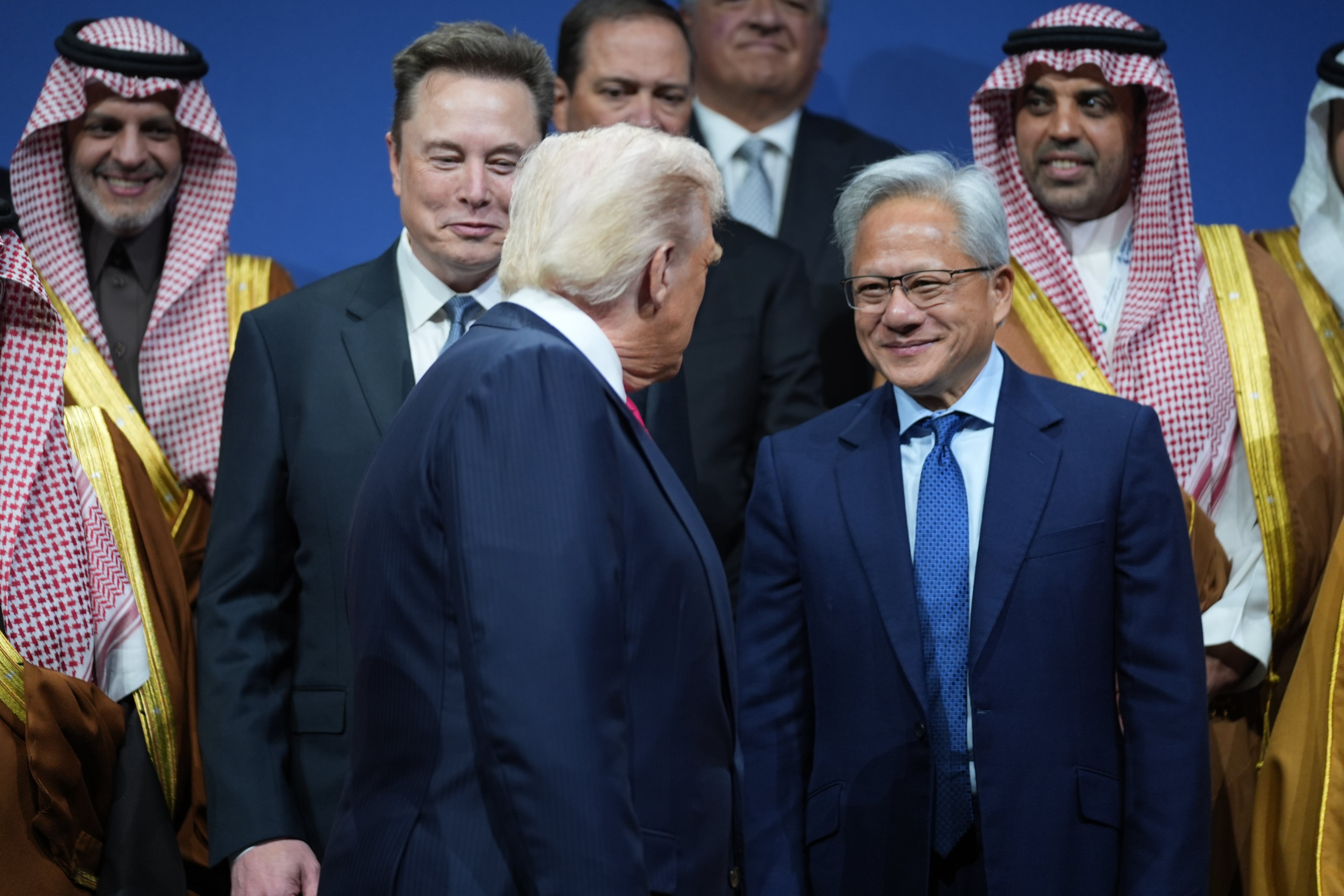
President Donald Trump says he will allow Nvidia to sell its H200 computer chip used in the development of artificial intelligence to “approved customers” in China. Trump said Monday on his social media site that he had informed China’s leader Xi Jinping and “President Xi responded positively!” There had been concerns about allowing advanced computer chips into China as it could help them to compete against the U.S. in building out AI capabilities. But there has also been a desire to develop the AI ecosystem with American companies such as chipmaker Nvidia.
House Republicans in key battleground districts are working to contain the political fallout expected when thousands of their constituents face higher bills for health insurance coverage obtained through the Affordable Care Act. For a critical sliver of the GOP majority, the impending expiration of the enhanced premium tax credits after Dec. 31 could be a major political liability as they potentially face midterm headwinds in a 2026 election critical to President Donald Trump’s agenda. For Democrats, the party’s strategy for capturing the House majority revolves around pinning higher bills for groceries, health insurance and utilities on Republicans.