For more than a century, the majority of colleges and universities have not paid most taxes. The Revenue Act of 1909 excused nonprofits operating “exclusively for religious, charitable, or educational purposes” in order to continue acting in the public interest.
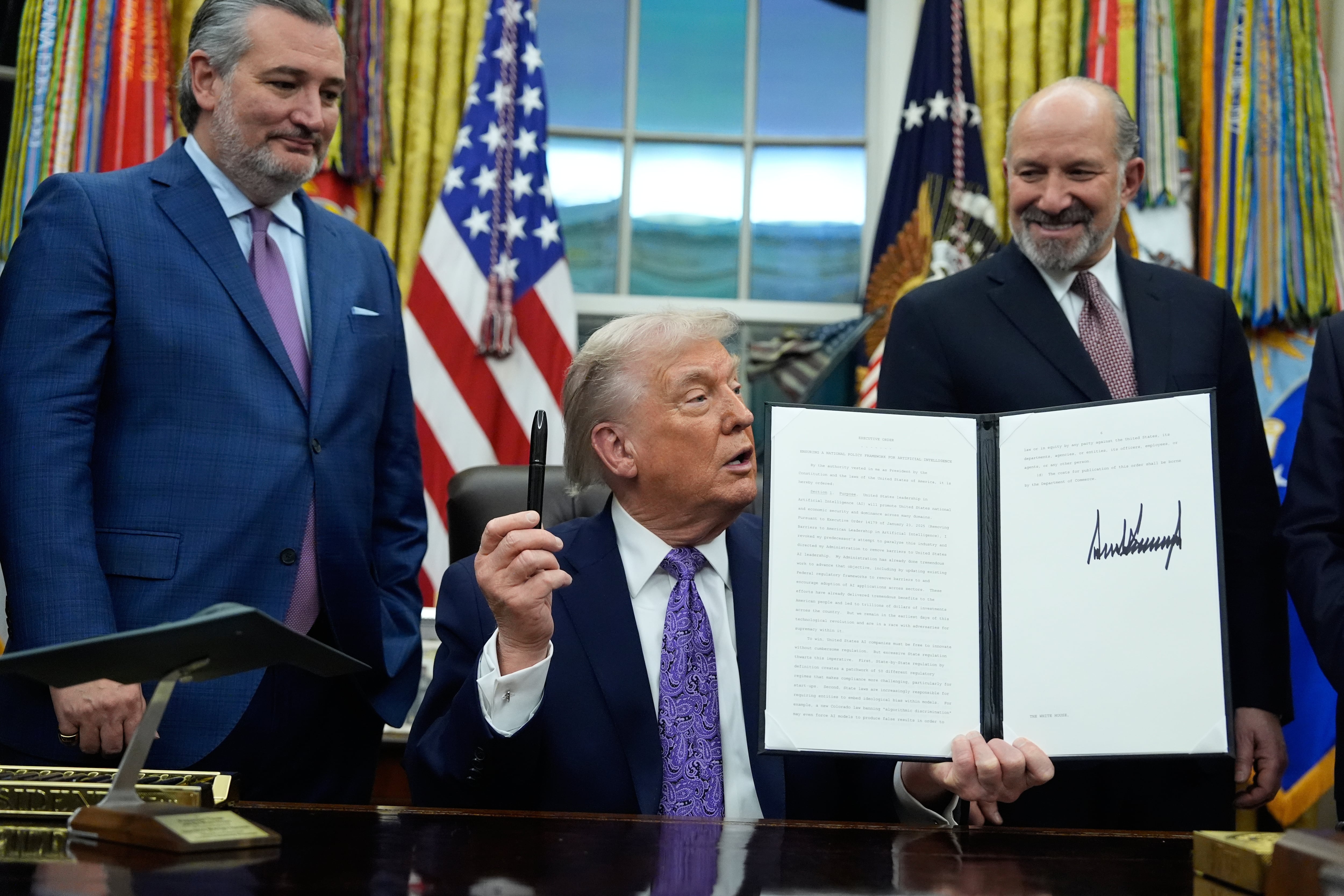
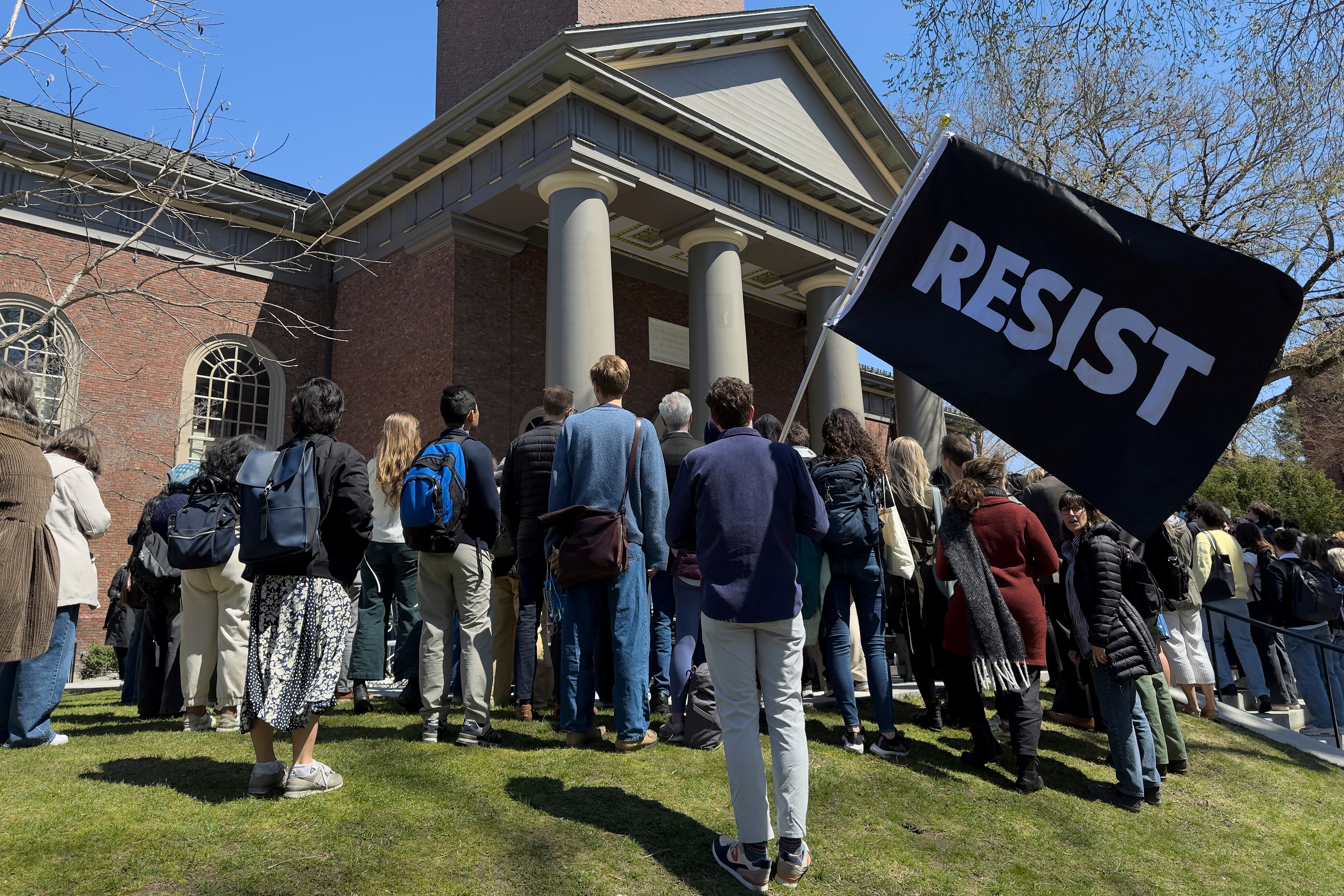
President Donald Trump is looking to challenge that designation, complaining that colleges and universities are “indoctrinating” their students with “radical left” ideas, rather than educating them. And he has decided to start with the 388-year-old Harvard University, one of the world's most prestigious institutions of learning and the first college founded in the American colonies.
On Tuesday, he targeted Harvard University in a post on his social media site, questioning whether it should remain tax-exempt “if it keeps pushing political, ideological, and terrorist inspired/supporting “Sickness?” Remember, Tax Exempt Status is totally contingent on acting in the PUBLIC INTEREST!”
Tax-exempt status, which is decided by the Internal Revenue Service, means that these institutions do not pay certain kinds of taxes and that their donors receive a tax deduction when they make gifts. The rules they have to follow to maintain that status are set out in the tax code. We spoke with attorneys who specialize in nonprofit law and freedom of speech to try to answer questions about this challenge.
Does a university's curriculum affect its charitable status?
In general, no. Colleges and universities have broad leeway to design the education they provide.
Genevieve Lakier, a First Amendment scholar at the University of Chicago Law School, said the U.S. Supreme Court has laid out four essential freedoms for colleges and universities — what to teach, how to teach it, who their students are and who their professors are.
“That’s the irreducible core of academic freedom and it is constitutionally protected in this country,” she said, adding the government cannot threaten funding cuts or revoking a school's tax status as punishment for its views or what the school teaches.
The First Amendment also protects the rights of other nonprofits to pursue their charitable missions under freedom of assembly, Lakier said, even if those missions are odious or the government does not like them.
Can the president ask the IRS to revoke a nonprofit’s tax-exempt status?
No, he is not supposed to, according to two nonprofit tax attorneys who wrote about a previous call from Trump to revoke the nonprofit status of colleges and universities.
In 1998, Congress passed a law that forbade federal officials from telling the IRS to investigate any taxpayer in an effort to increase trust in tax enforcement.
The attorneys, Ellen Aprill and Samuel Brunson, also pointed to legislation that forbade the IRS “from targeting individuals and organizations for ideological reasons,” after a controversy over how it treated Tea Party groups in 2013.
H
ow does a nonprofit get and keep its tax-exempt status?
The IRS recognizes multiple reasons for a nonprofit to to be exempt from paying many kinds of taxes, including pursuing charitable, religious or educational missions among many other examples. The statute specifically names sports competitions, preventing cruelty to children or animals and defending human or civil rights as exempt purposes.
Nonprofits can lose their tax-exempt status for things like improperly paying its directors, endorsing a political candidate or operating a business unrelated to its charitable mission.
In short, tax attorneys say nonprofits must operate “exclusively for charitable purposes,” which is a different standard than what the president referred to as, “acting in the public interest.”
Phil Hackney, a law professor at the University of Pittsburgh, said, “Long history and precedent suggest that Harvard and institutions of higher education are operating for educational purposes, which are considered charitable," under the tax code.
He said it would be exceedingly difficult to make a case that a college or university was not operating for charitable purposes under current law. However, Edward McCaffery, who teaches tax policy at the University of Southern California Gould School of Law, warned there is precedent for the IRS revoking the tax-exempt status of colleges that the government could lean on.
“I think to dismiss it out of hand as over-the-top bluster and that the administration has no power to unilaterally pursue it, I think that’s naive," McCaffery said. "This could happen.”
Has the IRS ever stripped a college of its tax-exempt status before?
Yes. In 1983, the Supreme Court upheld a lower court decision that the IRS could deny tax-exempt status to Bob Jones University, a private Christian university that banned interracial dating and marriage on campus, and Goldsboro Christian Schools, which employed racially discriminatory admissions policies.
The court found the IRS had some discretion to determine whether an organization seeking tax-exempt status met standards of “charity,” meaning that it “must serve a public purpose and not be contrary to established public policy.”
Nonetheless, McCaffery said, “The ability of the IRS just to come in and deny tax exemption, it better be a very clear, long-standing, deeply held public policy, and not political preferences for certain kinds of positions, attitudes and voting patterns.”
How can the IRS revoke a nonprofit’s tax-exempt status?
Usually, the IRS would open an audit, where it gathers evidence that a nonprofit is not operating exclusively for charitable purposes.
“The IRS would have to send to Harvard a proposed revocation of its status,” Hackney said. “At that point, Harvard would have many different means to talk with the IRS about why they believed they were within the law,” including suing.
However, Hackney said the U.S. Department of Treasury could implement new regulations, for example, stating that operating a diversity, equity and inclusion program is not consistent with charitable purposes. Such a change would usually take years to make and would run counter to decades of precedent, Hackney said.
“I am skeptical this effort will be successful,” he said. “If it were, this would be the most dramatic change of charitable law in my lifetime and I would say in the history of our charitable law.”
___
This story has been updated to reflect that Harvard University is 388 years old. A previous version stated it is 488 years old.
___
Associated Press coverage of philanthropy and nonprofits receives support through the AP’s collaboration with The Conversation US, with funding from Lilly Endowment Inc. The AP is solely responsible for this content. For all of AP’s philanthropy coverage, visit https://apnews.com/hub/philanthropy.