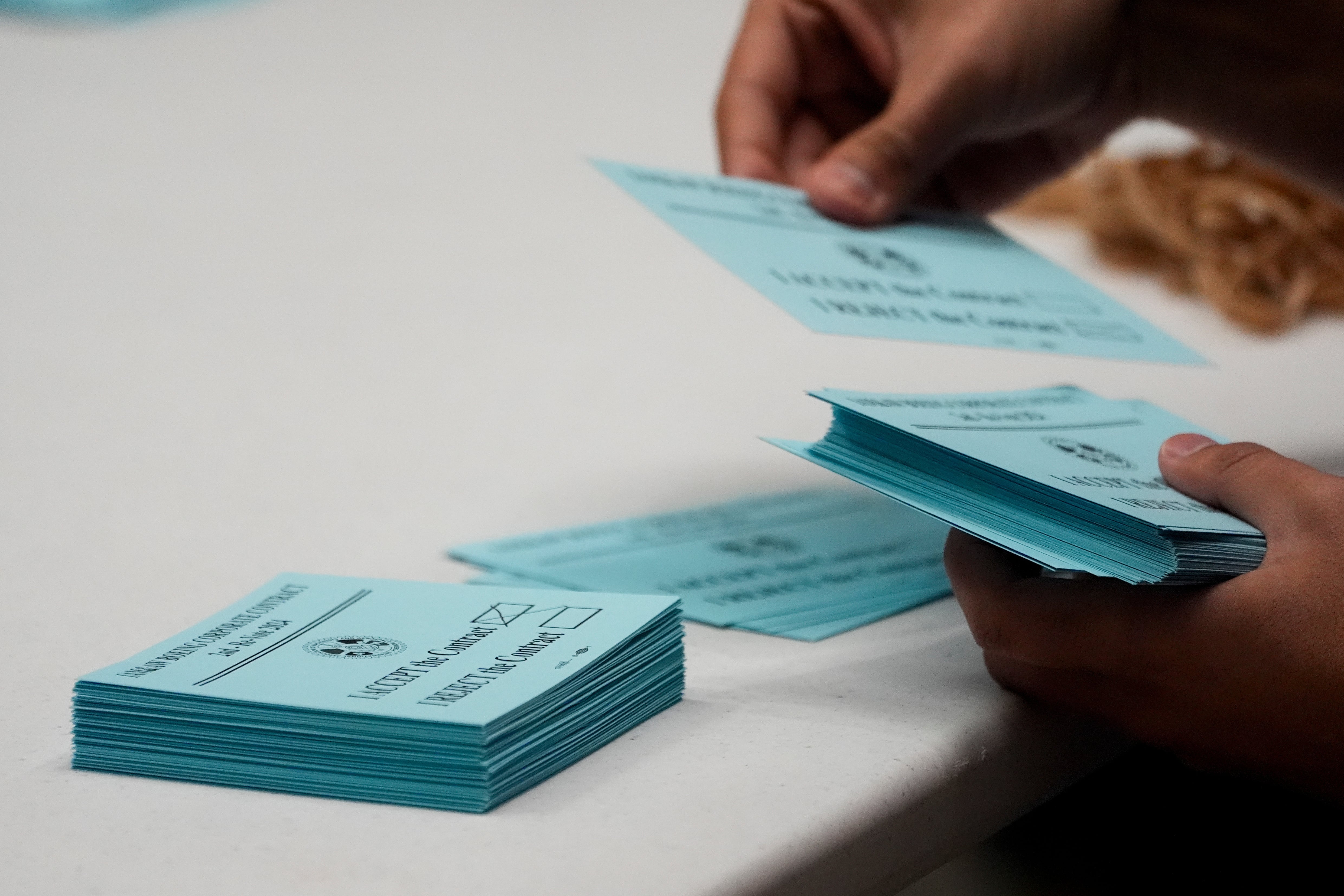
Boeing workers at three Midwest plants where military aircraft and weapons are developed voted Sunday to reject the company’s latest contract offer and to continue a strike that started almost three months ago.

The strike by about 3,200 machinists at the plants in in Mascoutah, Illinois, and the Missouri cities of St. Louis and St. Charles is smaller in scale than a walkout last year by 33,000 Boeing workers who assemble commercial jetliners but threatens to complicate the aerospace company’s progress in regaining its financial footing.

“Boeing claimed they listened to their employees – the result of today’s vote proves they have not,” Brian Bryant, president of the International Association of Machinists and Aerospace Workers, said in a statement.

Boeing said it was disappointed by the result and noted the vote had been a close one. The company said in a statement that it was increasingly hearing from workers “who want to cross the picket line” and “understand the value of our offer.”

“The union’s statement is misleading since the vote failed by the slimmest of margins, 51% to 49%,” the statement read. “We are turning our focus to executing the next phase of our contingency plan in support of our customers.”

The machinists’ union acknowledged the vote was close but said in a message to members that “very few” workers have crossed the picket line.

“Our solidarity remains strong, and the company’s claim otherwise is wrong,” the union said.

Union leaders say talks have stalled over issues such as wages and retirement benefits, while Boeing has argued that workers’ demands exceed the cost of living in the Midwest.

Ahead of Sunday’s vote, the union told its members that it did not recommend approval of the company’s latest offer, which it said “had no meaningful improvements” to retirement benefits and wage increases for workers with more seniority.

Negotiations escalated over the summer in the days leading up to the strike, with the workers rejecting an earlier proposed agreement that included a 20% wage hike over the life of the five-year contract.

Boeing quickly countered with a modified agreement that didn’t boost the proposed pay raises but did remove a scheduling provision affecting the workers’ ability to earn overtime pay. Workers rejected that offer, too, and went on strike the next morning. They also voted against revised terms in September.

The company has said that it was prepared for a strike, with a contingency plan in place “to ensure our non-striking workforce can continue supporting our customers.”

Boeing’s Defense, Space & Security business accounts for more than one-third of the company’s revenue. Boeing is set to report its third-quarter earnings on Wednesday.

Share:
More In Business
OpenAI names Slack CEO Dresser as first chief of revenue
OpenAI has appointed Slack CEO Denise Dresser as its first chief of revenue. Dresser will oversee global revenue strategy and help businesses integrate AI into daily operations. OpenAI CEO Sam Altman recently emphasized improving ChatGPT, which now has over 800 million weekly users. Despite its success, OpenAI faces competition from companies like Google and concerns about profitability. The company earns money from premium ChatGPT subscriptions but hasn't ventured into advertising. Altman had recently announced delays in developing new products like AI agents and a personal assistant.
Trump approves sale of more advanced Nvidia computer chips used in AI to China
President Donald Trump says he will allow Nvidia to sell its H200 computer chip used in the development of artificial intelligence to “approved customers” in China. Trump said Monday on his social media site that he had informed China’s leader Xi Jinping and “President Xi responded positively!” There had been concerns about allowing advanced computer chips into China as it could help them to compete against the U.S. in building out AI capabilities. But there has also been a desire to develop the AI ecosystem with American companies such as chipmaker Nvidia.
Trump says Netflix deal to buy Warner Bros. ‘could be a problem’ because of size of market share
President Donald Trump says a deal struck by Netflix last week to buy Warner Bros. Discovery “could be a problem” because of the size of the combined market share. The Republican president says he will be involved in the decision about whether federal regulators should approve the deal. Trump commented Sunday when he was asked about the deal as he walked the red carpet at the Kennedy Center Honors. The $72 billion deal would bring together two of the biggest players in television and film and potentially reshape the entertainment industry.
What to know about changes to Disney parks’ disability policies
Disney's changes to a program for disabled visitors are facing challenges in federal court and through a shareholder proposal. The Disability Access Service program, which allows disabled visitors to skip long lines, was overhauled last year. Disney now mostly limits the program to those with developmental disabilities like autism who have difficulty waiting in lines. The changes have sparked criticism from some disability advocates. A shareholder proposal submitted by disability advocates calls for an independent review of Disney's disability policies. Disney plans to block this proposal, claiming it's misleading. It's the latest struggle by Disney to accommodate disabled visitors while stopping past abuses by some theme park guests.
Load More