Trump and Dump: Trump Social went public making The Donald very rich. How long will it last?
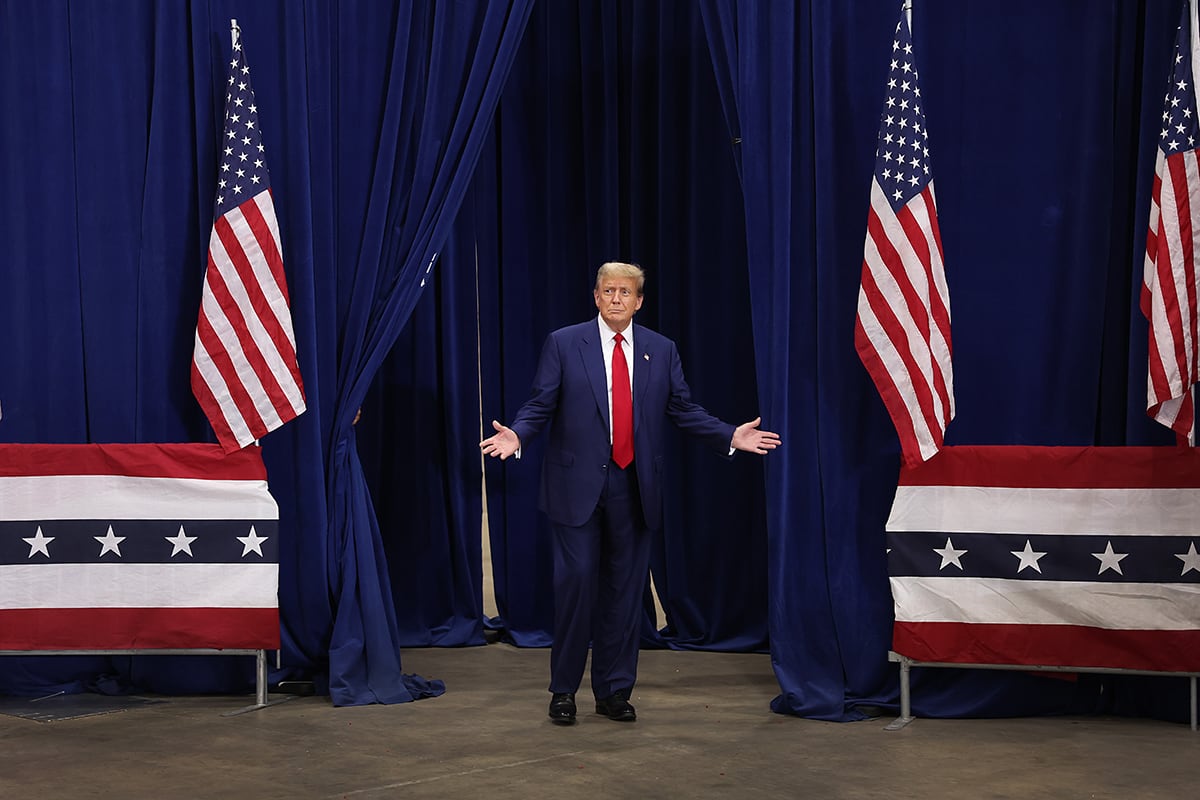
When it comes to the stock market, it’s back to the laws of physics: What goes up must come down, especially if it's connected to Donald Trump. After The former president’s social media company, Trump Media & Technology Group went public last week, shares popped 16 percent by the end of the day, giving Trump himself a stake worth some $5 billion. But when the company, trading under the ticker symbol DJT, released its financials on Monday, the share price dropped 20 percent, and $1 billion of Trump’s own stake evaporated.
The reason? Despite its sky-high valuation, it made just over $4.1 million in revenue last year while piling up costs of $58.2 million. The company’s own auditors said the losses "raise substantial doubt about its ability to continue as a going concern." It’s also gathered the attention of speculators who are shorting the stock. One data firm noted that about 4.9 of the 5 million shares that can be borrowed are already in the hands of short sellers. Thursday, Trump himself weighed in, apparently trying to coax the share price back up.
“People want to hear what I have to say,” he said in a post on the site, “perhaps, according to experts, more than anyone else in the World.”
Don’t mess with the Mouse: Disney shareholders send activist investor Peltz packing
Nelson Peltz, the activist investor who wanted to shake up the Walt Disney Co., was soundly defeated in a shareholder vote Wednesday when he tried to win a seat on Disney’s board. Peltz had criticized many areas of Disney’s operations, saying it needed to boost the margins on its streaming business, that its studios have lost their creative buzz and that the company needed a better plan to monetize sports giant ESPN. His defeat lets Disney CEO Bob Iger focus on rebuilding Disney, from expanding the theme parks to reinvigorating the movie studio and turning a profit on its streaming operation.
But Peltz’s defeat won’t reassure investors who agreed with the investor’s chief argument: Disney has done little to find a successor to the 73-year-old Iger, who’s run the company for almost 16 of the last 17 years.
Iger’s contract runs for two more years, then he’s promised to step down. The market has made clear that it wants Disney to sharpen its performance. While shares were up about 35 percent before Wednesday, when the proxy tally was announced, they are still far off a 2021 peak of $197, trading Thursday around $117.
Shari Redstone wants to sell Paramount: But what’s it really worth?
Shari Redstone is angling to sell Paramount, the entertainment giant she created in 2019 by merging Viacom and CBS. Redstone entered exclusive talks with SkyDance Studios, a much smaller entertainment firm led by Oracle billionaire Larry Ellison’s son, David. That leaves some disappointed suitors, including Apollo, which made a $26 billion all-cash offer for Paramount and Weather Channel’s Byron Allen, who in January offered $14 billion.
Redstone, who inherited control of CBS and Viacom after a decade-long public battle with her aging father Sumner, is the object of two lawsuits from investors saying she’s destroyed the company’s value. It was worth about $25 billion three years ago and it now has a market capitalization of around $9 billion. Paramount faces some steep challenges: it can’t make money off its streaming platform, MTV and Nickelodeon are in decline and CBS’s linear broadcasts are steadily losing viewers.
That pushed S&P last week to downgrade Paramount’s debt to junk. News of the talks with SkyDance initially sent shares up 15 percent, but on Thursday they tumbled by 9 percent, an indication that shareholders think the deal would further cut the company’s value.
Entertainment mogul Barry Diller, who owns Interactive Group and co-founded FOX with Rupert Murdoch, summarized the market’s shock in an interview with CNBC on Thursday: "It's the worst time in the world to sell this thing. It is the perfect candidate for actually turning itself around but the idea that you ought to sell it?”
Let’s Make a Deal: Corporations are back to merging and acquiring with abandon.
If there’s one thing Wall Street likes to make a big deal about, it’s big deals. Deals are supposed to increase efficiency and free up capital while creating that great Wall Street buzzword, synergy.
They also deliver hefty fees to the bankers and lawyers who structure the deals. A multi-year dearth of deals since the pandemic began now looks like it’s lifting, with at least 11 deals worth $10 billion or more this quarter.
The largest was Capital One Financial’s $35.3 billion purchase of Discover Financial Services, the one-time Sears credit card, and other big deals included Diamondback Energy’s $26 billion merger with Endeavor Energy and Home Depot’s $18.5 billion bid for construction material distributor SRS.
But the sexiest deal so far this year was just announced this week: Endeavour, the Hollywood talent agency and entertainment group led by Ari Emanuel — and the inspiration for the talent agency in the TV series Entourage — is going private. It will be sold to its majority owner, L.A.-based private equity fund Silver Lake, at a valuation of $13 billion. The deal comes just three years after Silver Lake took Endeavour public. The big winner is, of course, Emanuel. He walks away with a $25 million fee, 2.5 percent of talent management revenue, up to $390 million in shares in the new firm, and a corporate jet.
Are EV’s running out of juice? Ford delays its EV program and Tesla sales plummet.
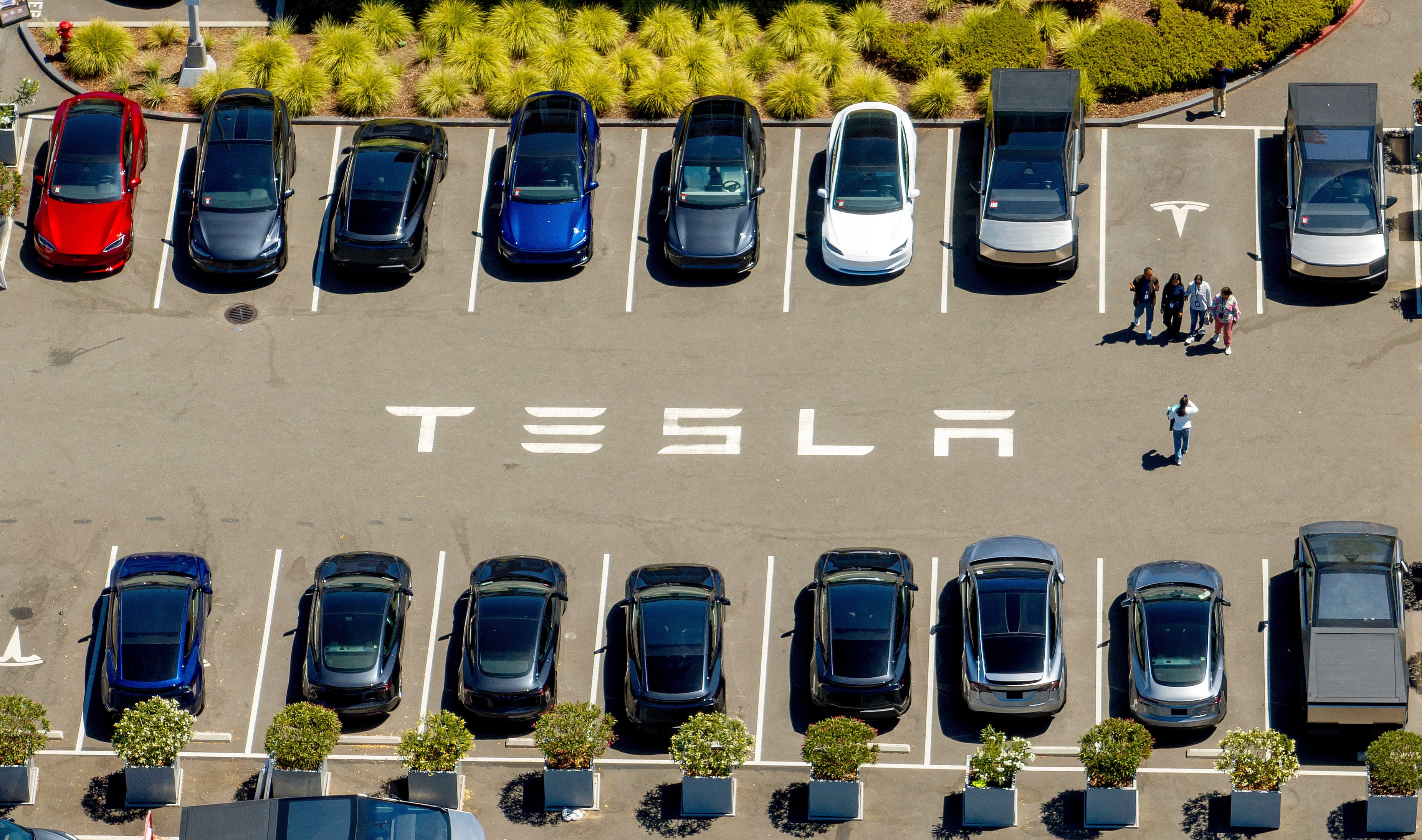
It’s getting harder to spark the sales of electric vehicles. First, Tesla reported an 8.5 percent drop in first-quarter sales this year. Now, Ford says it’s lowering the voltage on its EV program.
An electric SUV will be delayed by two years to 2027, and a new electric pickup plant in Tennessee has been pushed back by a year to 2026. While EV sales are growing (Ford’s climbed 86 percent to 20,223 units last quarter) they still account for less than 4 percent of sales, and that’s been led by the Mustang Mach-E crossover, which receives incentives of $8,100.
The big problem: The pool of drivers willing to spend $50,000 or more for an EV is tapped out, more carmakers are competing to sell EVs and many potential buyers are waiting for the U.S. to build out its charging network. No one wants to be stuck in the Sonoran desert with a dead battery. But carmakers and drivers aren’t giving up on cleaner cars that use less $4-a-gallon gasoline. In fact, Ford says it will shift its attention to hybrids, and offer hybrid versions of its entire Ford Blue range by the end of the decade. The company is not pulling the plug on EV’s, though, reckoning the key to a sustainable EV market is a cheaper power system than the current heavyweight lithium-ion batteries. Ford says it’s set up a “skunkworks” in Irvine, California, to develop a low-cost drive train and EV platform that can carry a host of bodies.
Peter S. Green is a veteran reporter and editor who has spent more than two decades covering business and finance from Eastern Europe to New York City, and has worked for Bloomberg News, The New York Post, The New York Times and The Messenger. He lives in New York City and is always looking for the next big story.