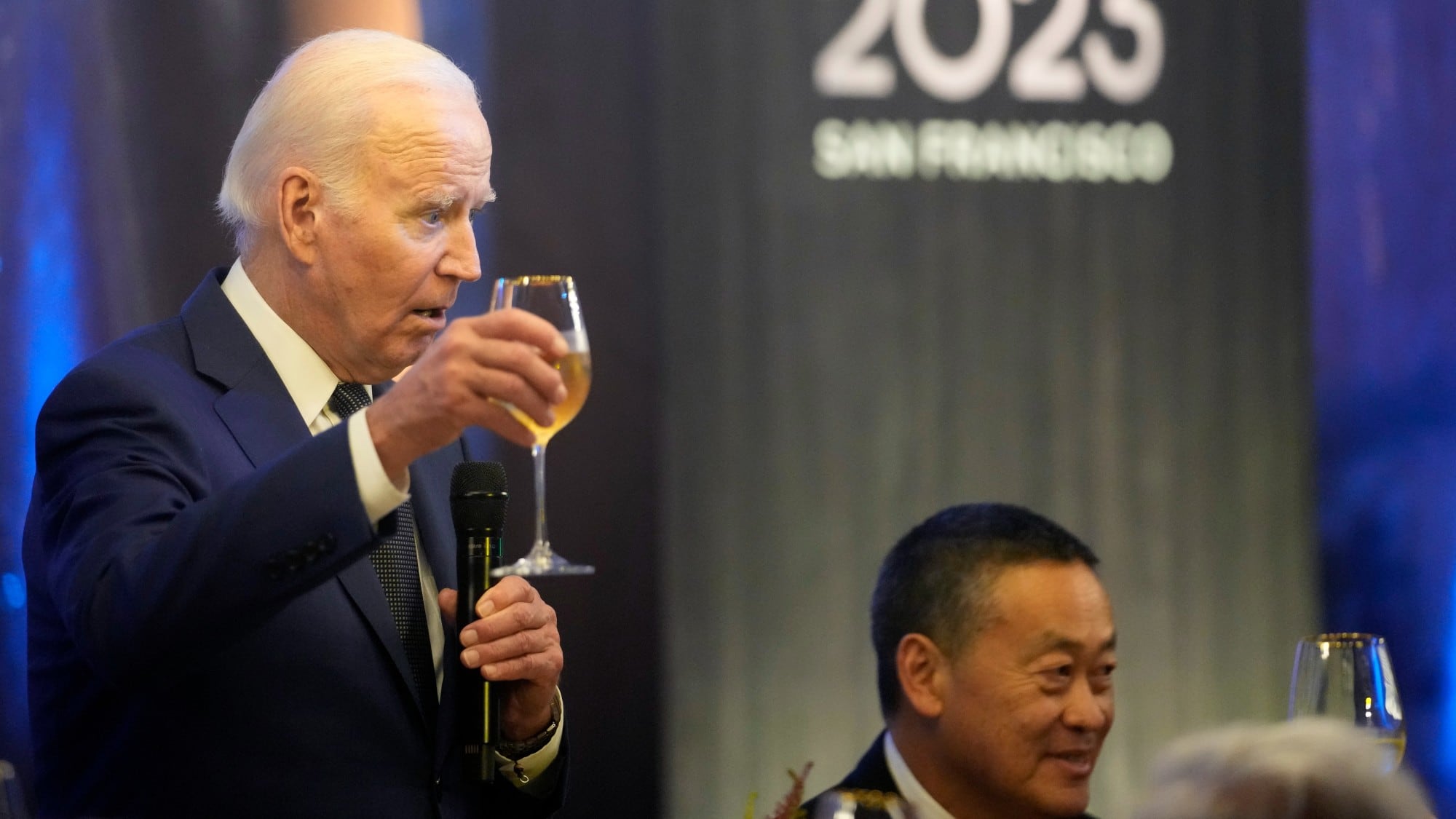
President Joe Biden offers a host at the heads of delegation dinner at the Asia-Pacific Economic Cooperation summit, Thursday, Nov. 16, 2023, at the Legion of Honor Museum in San Francisco. (AP Photo/Godofredo A. Vásquez)
By Colleen Long
President Joe Biden on Thursday signed a temporary spending bill a day before a potential government shutdown, pushing a fight with congressional Republicans over the federal budget into the new year, as wartime aid for Ukraine and Israel remains stalled.
The measure passed the House and Senate by wide bipartisan margins this week, ensuring the government remains open until after the holiday season, and potentially giving lawmakers more time to sort out their considerable differences over government spending levels for the current fiscal year. Biden signed the bill in San Francisco, where he is hosting the summit of Asia-Pacific Economic Cooperation economies.
News of the signing came late at night. The president signed the bill at the Legion of Honor Museum, where he held a dinner for APEC members.
The spending package keeps government funding at current levels for roughly two more months while a long-term package is negotiated. It splits the deadlines for passing full-year appropriations bills into two dates: Jan. 19 for some federal agencies and Feb. 2 for others, creating two dates when there will be a risk of a partial government shutdown.
The two-step approach was championed by new House Speaker Mike Johnson, a Republican, and was not favored by many in the Senate, though all but one Democrat and 10 Republicans supported it because it ensured the government would not shut down for now.
Johnson has vowed that he will not support any further stopgap funding measures, known as continuing resolutions. He portrayed the temporary funding bill as setting the ground for a spending “fight” with the Senate next year.
The spending bill does not include the White House’s nearly $106 billion request for wartime aid for Israel and Ukraine. Nor does it provide humanitarian funding for Palestinians and other supplemental requests, including money for border security. Lawmakers are likely to turn their attention more fully to that request after the Thanksgiving holiday in hopes of negotiating a deal.
AP writers Stephen Groves and Zeke Miller contributed from Washington.
President Donald Trump's administration last month awarded a $1.2 billion contract to build and operate what's expected to become the nation’s largest immigration detention complex to a tiny Virginia firm with no experience running correction facilities.
Cracker Barrel said late Tuesday it’s returning to its old logo after critics — including President Donald Trump — protested the company’s plan to modernize.
Federal Reserve Gov. Lisa Cook's lawyer says she'll sue President Donald Trump's administration to try to prevent him from firing her. Longtime Washington attorney Abbe Lowell said Tuesday that Trump “has no authority to remove” Cook. If Trump succeeds in removing Cook from the Fed's board of governors, it could erode the Fed’s political independence, which is considered critical to its ability to fight inflation because it enables the Fed to take unpopular steps like raising interest rates. The Republican president said Monday he was removing Cook because of allegations she committed mortgage fraud. Cook was appointed by Democratic President Joe Biden in 2022 and says she won't step down.
Federal Reserve governor Lisa Cook late Wednesday said she wouldn’t leave her post after Trump on social media called on her to resign over an accusation from one his officials that she committed mortgage fraud.
Politico's Marcia Brown breaks down the MAHA draft roadmap: industry-friendly, light on regulation, heavy on research and voluntary food policy changes.
Intel CEO Lip-Bu Tan says he’s “always operated within the highest legal and ethical standards” after coming under pressure following President Donald Trump’s call for him to resign.
Millions of Americans saving for retirement through 401(k) accounts could have the option of putting their money in higher-risk private equity and cryptocurrency investments.
A new federal rule would make it easier for companies to use drones over longer distances out of sight of the operator without having to go through a cumbersome waiver process.
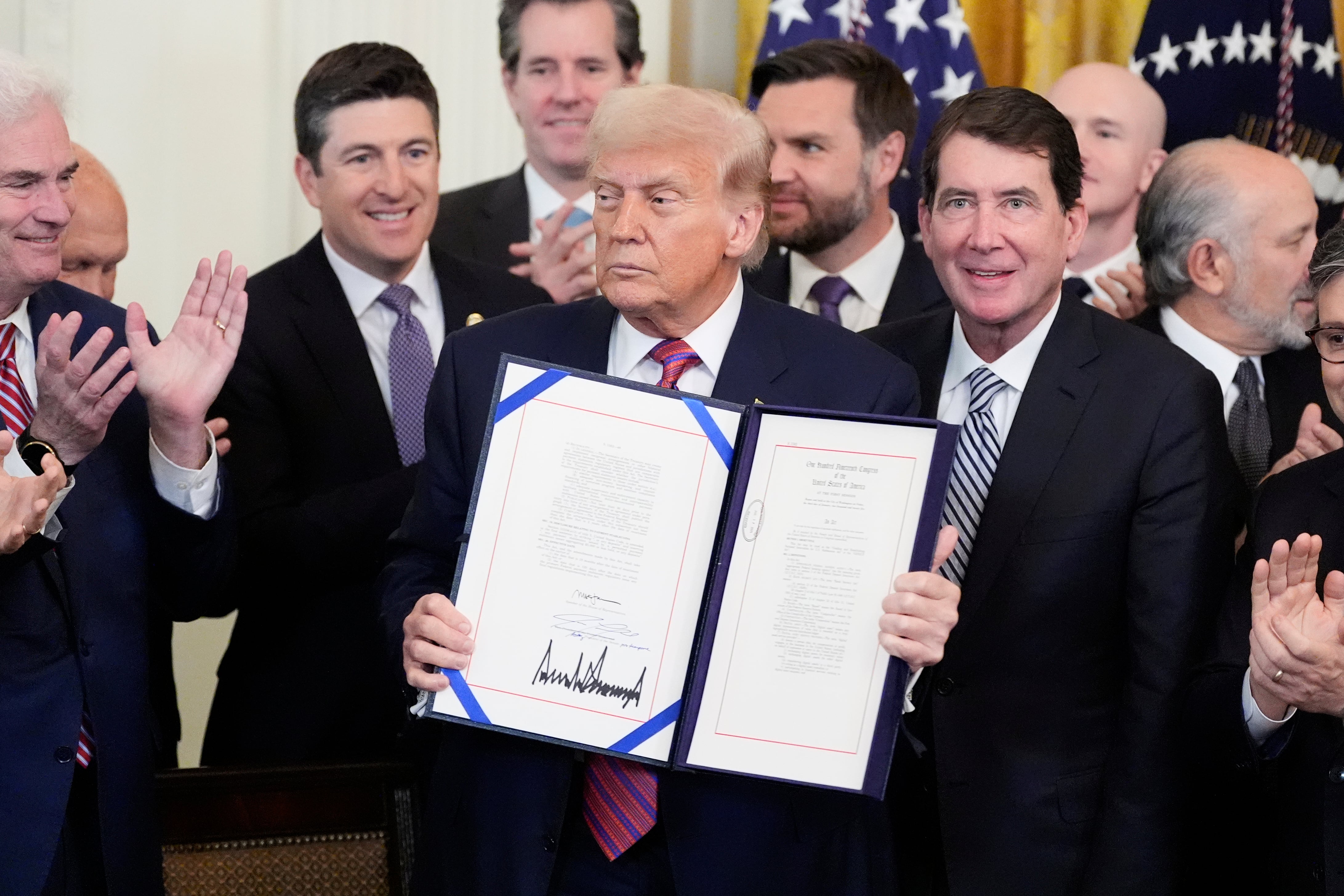
President Donald Trump has signed the GENIUS Act into law, setting new regulations for stablecoins, a type of cryptocurrency tied to assets like the U.S. dollar.