By Lolita C. Baldor and Eric Tucker
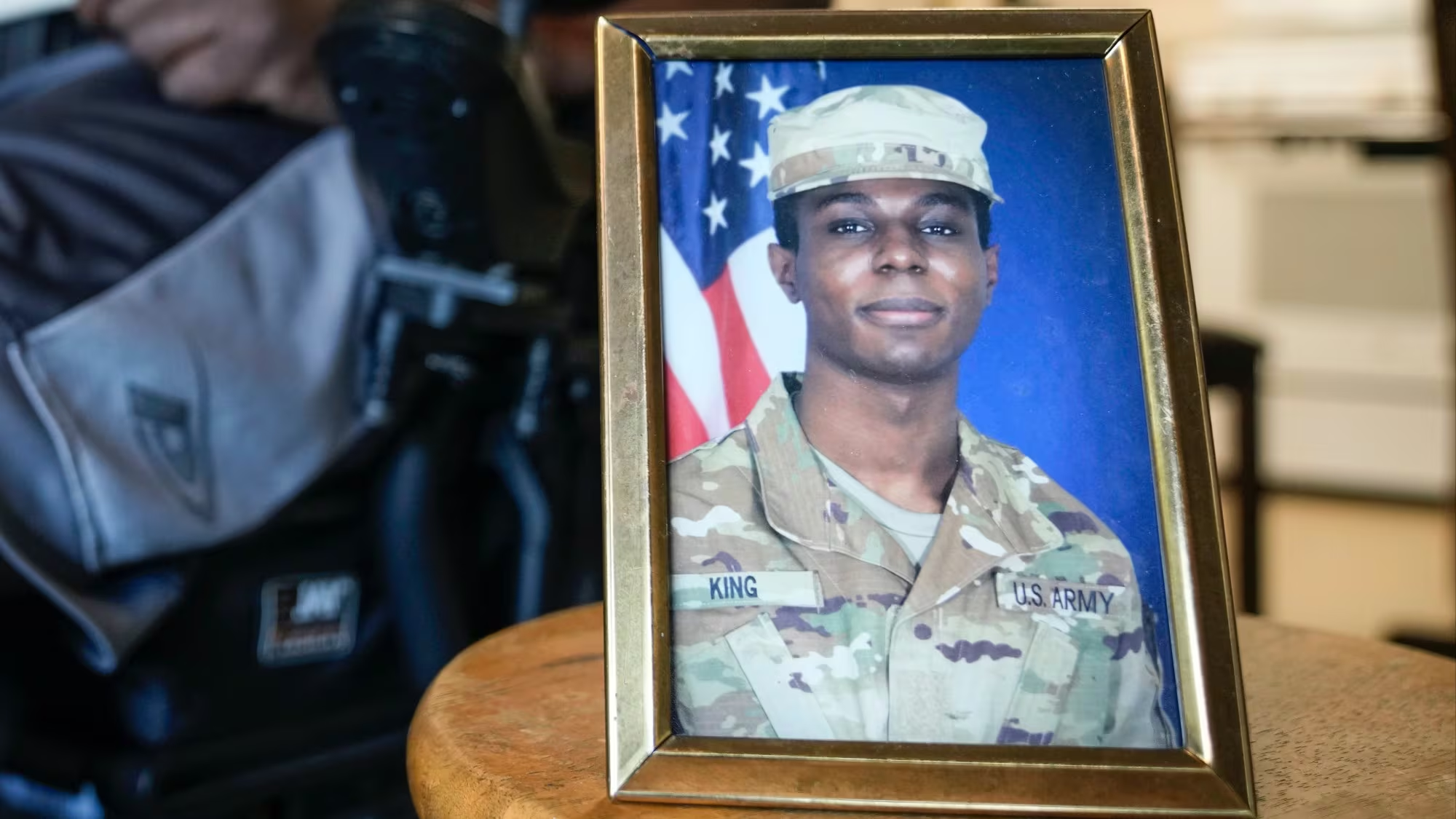
An Army private who fled to North Koreabefore being returned home to the United States last month has been detained by the U.S. military, two officials said Thursday night, and is facing charges including desertion and possessing sexual images of a child.
The eight counts against Pvt. Travis King are detailed in a charging document seen by The Associated Press. The officials who confirmed King's confinement spoke to The Associated Press on condition of anonymity because the charges have not been publicly announced.
King's mother, Claudine Gates, said in a statement that she loved her son “unconditionally” and was “extremely concerned about his mental health.”
“As his mother, I ask that my son be afforded the presumption of innocence,” she said.
Desertion is a very serious charge and can result in imprisonment for as much as three years. King is also accused of kicking and punching other officers last year, unlawfully possessing alcohol, making a false statement and possessing a video of a child engaged in sexual activity. That allegation dates to July 10, the same day he was released from a South Korean prison where he had served nearly two months on assault charges.
One week later, King, 23, ran across the heavily fortified borderfrom South Korea and became the first American detained in North Korea in nearly five years. He was set to be sent to Fort Bliss, Texas, where he could have faced potential additional disciplinary actions and discharge.
Officials said King was taken to the airport and escorted as far as customs. But instead of getting on the plane, he left and later joined a civilian tour of the Korean border village of Panmunjom. He ran across the border, which is lined with guards and often crowded with tourists, in the afternoon.
After about two months, Pyongyang abruptly announced that it would expel him. He was flown on Sept. 28 to an Air Force base in Texas.
His release from North Korea was aided by Swedish officials who took King to the Chinese border, where he was met by U.S. Ambassador to China Nicholas Burns, the Swedish ambassador to China and at least one U.S. Defense Department official. He was then flown to a U.S. military base in South Korea before heading to the U.S.
Once back in the U.S., King was taken to Brooke Army Medical Center at Fort Sam Houston outside San Antonio. He went through what the military describes as a “reintegration” process that included medical exams, psychological assessments and debriefings. And he was also allowed to meet with family.
Because he had willingly run into enemy hands, he legally was kept in military custody throughout that process.
At the time, officials said they did not know exactly why North Korea decided to let King go, but suspected Pyongyang determined that as a low-ranking serviceman he had no real value in terms of either leverage or information. King joined the Army in January 2021, and served as a cavalry scout.
While he was gone, Army leaders declared him absent without leave, opting to not consider him a deserter, which is far more serious. By declaring King a deserter, the Army would have to conclude that King left and intended to stay away permanently. In times of war, desertion can carry the death penalty.
Service members can go AWOL for several days, but may return voluntarily. The punishment can include confinement in the brig, forfeiture of pay or dishonorable discharge and it is largely based on how long they were away and whether they were apprehended or returned on their own.
The charging document does not provide significant detail on any of the allegations, though it does accuse King of knowingly possessing a video of a child engaging in sexual conduct last July 10 and says that he solicited a user of Snapchat, a social media platform, to produce images of underage sexual activity.
Sean Timmons, an attorney who specializes in military law at the Tully Rinckey law firm and who reviewed the charging document, said all the transactions that occurred on Snapchat were not secure or private and were accessible by the government.
“He probably reasonably believed his illegal conduct would have no evidentiary trail, but Snapchat actually saves everything,” Timmons said.
Associated Press writer Tara Copp in Washington contributed to this report.