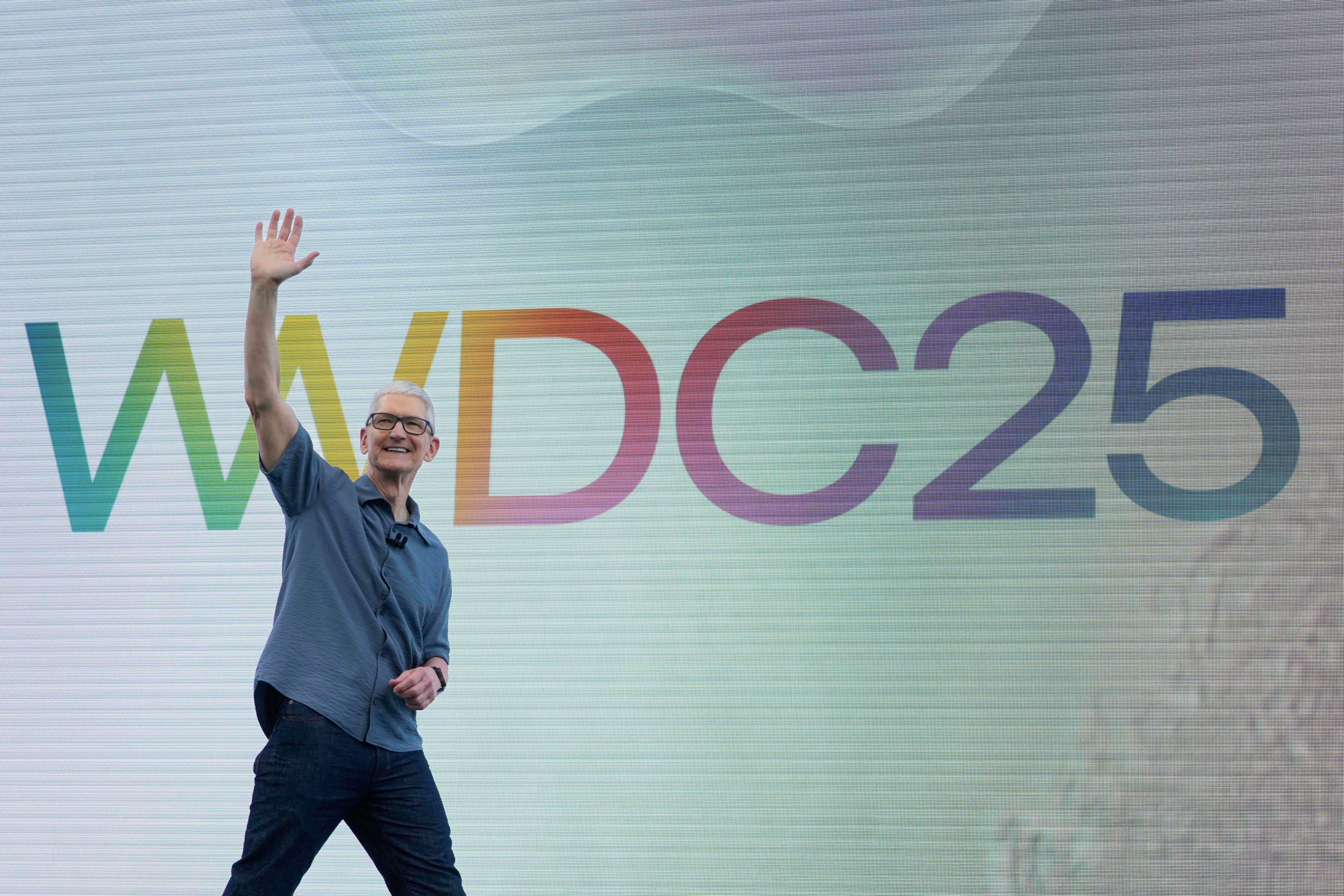
CUPERTINO, Calif. (AP) — After stumbling out of the starting gate in Big Tech’s pivotal race to capitalize on artificial intelligence, Apple tried to regain its footing Monday during an annual developers conference that focused mostly on incremental advances and cosmetic changes in its technology.
The presummer rite, which attracted thousands of developers from nearly 60 countries to Apple’s Silicon Valley headquarters, was more subdued than the feverish anticipation that surrounded the event during the previous two years.
Apple highlighted plans for more AI tools designed to simplify people’s lives and make its products even more intuitive while also providing an early glimpse at the biggest redesign of its iPhone software in a decade. In doing so, Apple executives refrained from issuing bold promises of breakthroughs that punctuated recent conferences.
In 2023, Apple unveiled a mixed-reality headset that has been little more than a niche product, and last year WWDC trumpeted its first major foray into the AI craze with an array of new features highlighted by the promise of a smarter and more versatile version of its virtual assistant, Siri — a goal that has hasn’t been achieved yet.
Apple had intended the planned Siri upgrade to herald its long-awaited attempt to become a major player in the AI craze after getting a late start in a phenomenon that so far has been largely led by OpenAI, Google, Microsoft and an array of cutting-edge startups.
“This work needed more time to reach our high-quality bar,” Craig Federighi, Apple’s top software executive, said Monday at the outset of the conference. The company didn’t estimate when its upgraded Siri would be completed.
“The silence surrounding Siri was deafening,” said Forrester Research analyst Dipanjan Chatterjee said. “No amount of text corrections or cute emojis can fill the yawning void of an intuitive, interactive AI experience that we know Siri will be capable of when ready. We just don’t know when that will happen. The end of the Siri runway is coming up fast, and Apple needs to lift off.”
The showcase unfolded amid nagging questions about whether Apple has lost some of the mystique and innovative drive that turned it into a tech trendsetter during its nearly 50-year history.
Instead of making a big splash as it did with the Vision Pro headset and its AI suite, Apple took a mostly low-key approach that emphasized its effort to spruce up the look of its software while also unveiling a new hub for its video games and new features like a “Workout Buddy” to help track physical fitness on its smartwatch.
Apple executives promised will make its software more compatible with the increasingly sophisticated computer chips that have been powering its products while also making it easier to toggle between the iPhone, iPad, and Mac.
“Our product experience has become even more seamless and enjoyable,” Apple CEO Tim Cook told the crowd as the 90-minute showcase wrapped up.
IDC analyst Francisco Jeronimo said Apple seemed to be largely using Monday’s conference to demonstrate the company still has blueprint for success in AI, even if it’s clearly going to take longer to realize the vision that was presented a year ago.
“This year’s event was not about disruptive innovation, but rather careful calibration, platform refinement and developer enablement —positioning itself for future moves rather than unveiling game-changing technologies,” Jeronimo said.
Besides redesigning its software. Apple will switch to a method that automakers have used to telegraph their latest car models by linking them to the year after they first arrive at dealerships. That means the next version of the iPhone operating system due out this autumn will be known as iOS 26 instead of iOS 19 — as it would be under the previous naming approach that has been used since the device’s 2007 debut.
The iOS 26 upgrade is expected to be released in September around the same time Apple traditionally rolls out the next iPhone models.
In an early sign that AI wasn’t going to be a focal point of this year’s conference, Apple opened the proceedings with a short video clip featuring Federighi speeding around a track in a Formula 1 race car. Although it was meant to promote the June 27 release of the Apple film, “F1” starring Brad Pitt, the segment could also be viewed as an unintentional analogy to the company’s attempt to catch up to the rest of the pack in AI technology.
While some of the new AI tricks compatible with the latest iPhones began rolling out late last year as part of free software updates, Apple still hasn’t been able to soup up Siri in the ways that it touted at last year’s conference. The delays became so glaring that a chastened Apple retreated from promoting Siri in its AI marketing campaigns earlier this year.
While Apple has been struggling to make AI that meets its standards, the gap separating it from other tech powerhouses is widening. Google keeps packing more AI into its Pixel smartphone lineup while introducing more of the technology into its search engine to dramatically change the way it works. Samsung, Apple’s biggest smartphone rival, is also leaning heavily into AI. Meanwhile, ChatGPT recently struck a deal that will bring former Apple design guru Jony Ive into the fold to work on a new device expected to compete against the iPhone.
Besides grappling with innovation challenges, Apple also faces regulatory threats that could siphon away billions of dollars in revenue that help finance its research and development. A federal judge is currently weighing whether proposed countermeasures to Google’s illegal monopoly in search should include a ban on long-running deals worth $20 billion annually to Apple while another federal judge recently banned the company from collecting commissions on in-app transactions processed outside its once-exclusive payment system.
On top of all that, Apple has been caught in the crosshairs of President Donald Trump’s trade war with China, a key manufacturing hub for the Cupertino, California, company. Cook successfully persuaded Trump to exempt the iPhone from tariffs during the president’s first administration, but he has had less success during Trump’s second term, which seems more determined to prod Apple to make its products in the U.S.
The multidimensional gauntlet facing Apple is spooking investors, causing the company’s stock price to plunge by nearly 20% so far this year — a decline that has erased $750 billion in shareholder wealth. After beginning the year as the most valuable company in the world, Apple now ranks third behind longtime rival Microsoft, another AI leader, and AI chipmaker Nvidia.
Apple’s shares closed down by more than 1% on Monday — an early indication the company’s latest announcements didn’t inspire investors.